
PROJECT HIGHLIGHT: Polskie Linie Kolejowe S.A.
February 10, 2026

SUMMARY:
CHALLENGE:
To install a fibre-enabled remote security system on Poland’s national rail network that utilises existing trackside conduit infrastructure and minimizes new construction.
SOLUTION:
FuturePath Speed 4-way 10/8 mm, a compact, streamlined MicroDuct bundle capable of being jetted over long distances between existing access chambers.
RESULT:
A space-efficient, cost-effective approach to technology upgrades which can be replicated across PLK’s rail network and others like it, with a 50% reduction in new access points for MicroDuct installation.

PKP Polskie Linie Kolejowe S.A. (PLK) is Poland's railway infrastructure manager. The organisation is responsible for maintaining tracks, creating timetables, conducting trains, and managing railway land nationwide. PLK needed to install a fibre-enabled system for the remote locking and unlocking of siding operations on the Studziska-Lubań Śląski line, as part of a wider project to improve safety and eliminate operational hazards on the 274 Wrocław Świebodzki – Zgorzelec line and the railway at large.
Railway installations are inherently challenging, with strict safety rules and limited working hours to protect installers and engineers and minimise disruption to transport users. For PLK, it was also important that the new fibre be installed in its existing footprint of 3 x 40 mm HDPE conduits and access chambers, typically situated at 1.5 km intervals across the network.
Faced with unpredictable future capacity demands, PLK planned to subdivide one 40 mm conduit with several loose MicroDucts. But this would require a large installation rig, which may have proved difficult to transport to remote locations, and complicated to manoeuvre beside the railway. Moreover, whether jetting or pulling, it was expected that several interstitial access points would need to be created to complete each 1.5 km length between chambers, as installing in one step would not be possible.
SOLUTION
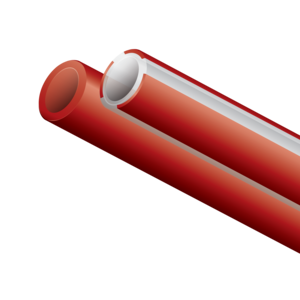
Dura-Line’s local experts proposed FuturePath Speed 4-way 10/8 mm. The product provides four high-density polyethylene (HDPE) MicroDucts and a low-density polyethylene (LDPE) oversheath that is thinner than that of a regular FuturePath bundle. And because the oversheath conforms to the natural shape of the MicroDucts, FuturePath Speed is also optimized for jetting into a larger conduit.
Traditionally, a MicroDuct bundle is pulled into a larger conduit. But with typical installation distances of around 300 metres per pull, this would have meant installing up to three interstitial access points between each chamber (and over 30 across the 17 km route) at average cost of €1,500 each. Loose MicroDucts could be jetted slightly further, but it was still expected that up to 20 additional access points would be required.
With Dura-Line on-site to oversee the installation, PLK’s contractor, ARMAT Sp. z.o.o., used a Terma MultiTyphoon machine to jet the streamlined FuturePath Speed an average of 1,100 metres, at speeds up to 30 metres per minute. This allowed ARMAT to limit the number of interstitial access points to just 10, a 50% reduction versus loose MicroDucts. And with a single reel to transport and manoeuvre around the jobsite, installation setup and takedown were also quick and straightforward.
Finally, loose MicroDucts do not typically lie as flat in a sub-duct as those in a bundle, which can impact cable jetting performance. But with the DuraSpeed bundle laying straight and uniform within the sub-duct, a Fibrain MetroJET MK-LXS6 micro cable (36 fibres, 5.3 mm diameter) could be installed smoothly, with three pathways left vacant for further upgrades in the future.


RESULTS
With a network that spans more than 10,000 km across a vast country, the significance of PLK’s project near Lubań is huge for the organisation and others like them. Despite benefitting from an existing nationwide network of three or four standard conduits, it would only take a few more projects like PLK’s to deplete this legacy space – particularly if using traditional larger fibre cables.
That’s why PLK pursued the concept of subdividing one of those legacy conduits with several loose MicroDucts. But with a relatively large installation footprint and the prospect of creating lots of new access points, this strategy may have limited the efficiency of the project and raised the typical problems associated with installing fibre near a railway – namely, limited working hours and strict safety rules – both of which add cost and complexity.
But in FuturePath Speed, PLK unlocked a space-efficient solution that allowed them to utilise their existing network footprint, while reducing the need for additional access points by 50%. And, most importantly, the solution is replicable across their (or any rail operator’s) entire network should further technology upgrades be required in future – be they for signalling, passenger Wi-Fi, or even leasing to commercial operators.